 Queen Creek Fence Rental
 Event Fencing Rental in Queen Creek
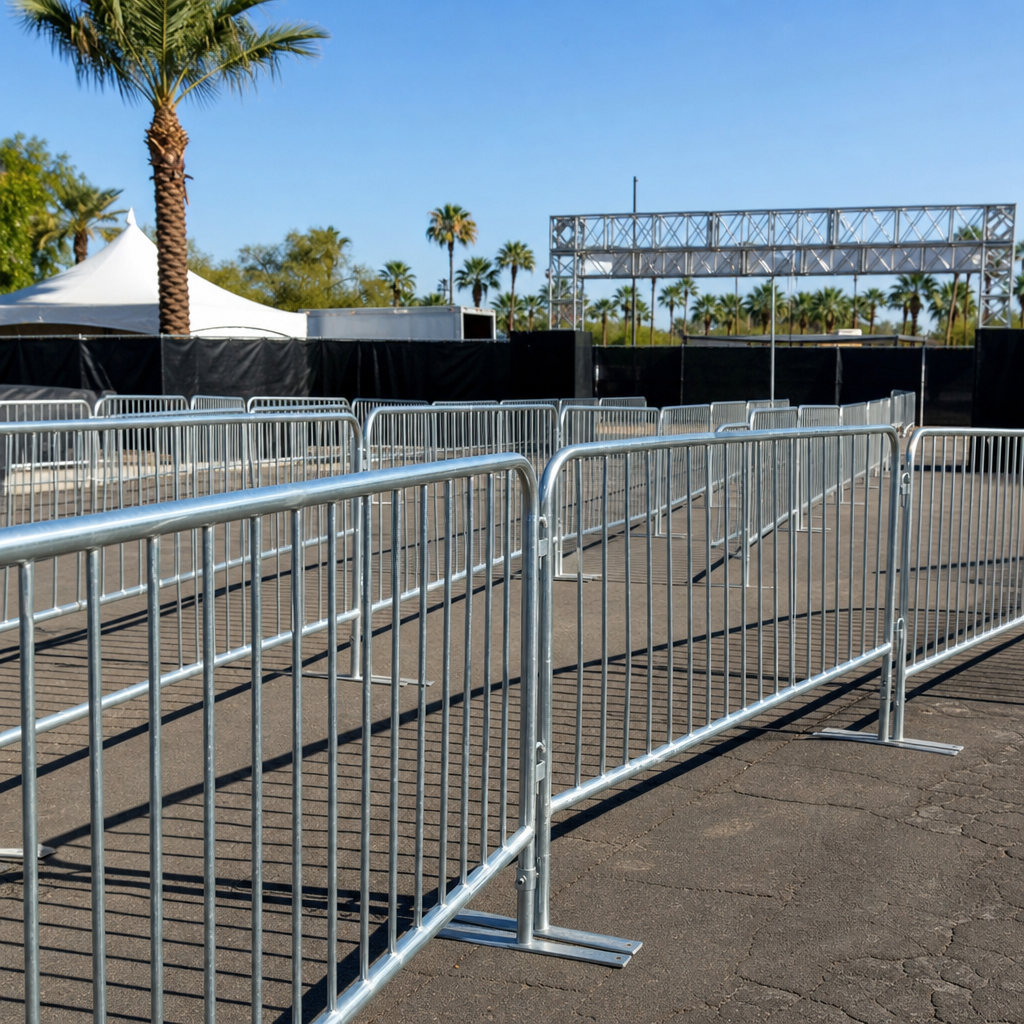
For festivals, races, markets, and private events across Queen Creek, panel fencing rents for $20–$50 per panel per month, with delivery, setup, and teardown quoted up front. Typical setups are event perimeters, beer garden enclosures, queue lines, and backstage boundaries, installed before load-in, gone after teardown.
Event season here is real, and it’s crowded
Queen Creek’s event calendar runs hard from October through April, when the weather flips from brutal to perfect. Schnepf Farms on Rittenhouse Road draws tens of thousands across the Pumpkin & Chili Party in October and its spring peach season. Horseshoe Park & Equestrian Centre on Riggs Road runs rodeos, barrel races, and the Roots N’ Boots festival every March. Down the road in Florence, Country Thunder pulls one of the biggest country music crowds in the state every April.
All of that competes for the same regional pool of event equipment on the same weekends. The organizers who lock in fencing early get their layout; the ones who call the week before get whatever’s left. If your event lands on an October or March weekend, book ahead, and if you’re reading this the week before, send a request anyway and we will give you a straight answer on inventory.
What event fencing actually has to do
A festival fence has three jobs, and they’re different from a construction fence:
- Control the gate. If people can walk in anywhere, you’re not selling tickets. You’re suggesting them. A tight perimeter with defined entries is the difference between gate revenue and a donation box.
- Contain the licensed area. Alcohol service in Arizona requires a physically defined boundary. More on that below.
- Protect the back of house. Generators, sound equipment, vendor stock, and performer areas need a hard line the public doesn’t cross.
Crowd flow (lining a 5K route, snaking a queue, keeping people off a parade street) is barricade work, not fence work. Those are covered too: see barricade rental.
Common configurations
Full event perimeter
Freestanding 6-foot chain link panels around the entire footprint, with gate panels placed at your ticketed entries and emergency exits. Panels stand on ballasted feet, no stakes, so they can go up on turf, gravel, or asphalt without leaving a mark. Venue owners care about that; so should you, because ground damage comes out of your deposit.
Beer garden and licensed-area enclosures
Arizona’s extension-of-premises process requires the service area boundary to match the site map your licensee files. The fence should be built to that map: enclosed panel runs, controlled entry gates for ID checks, and a service gate for restocking. Send the drawing with your quote request so we can match the fence to it.
Queue lines and gate funnels
Short panel runs that turn a mob at the gate into a line at the gate. Cheap insurance for the first hour of any ticketed event.
Backstage and equipment compounds
A screened enclosure around generators and gear does double duty: security and sightlines. Add privacy windscreen and the public sees a clean branded wall instead of cable runs and fuel cans, and your sponsors get mesh real estate to print on.
Event fencing pricing
| Setup | Typical size | Cost range |
|---|---|---|
| Queue lines / gate funnel | 4–10 panels | $80–$500 |
| Beer garden enclosure | 10–25 panels | $200–$1,250 |
| Vendor market perimeter | 20–40 panels | $400–$2,000 |
| Full festival perimeter | 40–100+ panels | $800–$5,000 |
| Delivery, install & removal | one-time | $100–$500 |
Panels run $20–$50 per panel per month depending on quantity, add-ons, and how far the site is from Queen Creek. Weekend events are typically billed at the monthly minimum. Full rate details live on the pricing page.
Wind: the thing desert event planners underestimate
Even outside the June-through-September monsoon, spring afternoons in the East Valley bring 25–35 mph gusts across open ground, and most event sites out here are open ground. Farm fields, equestrian facilities, desert lots near Gold Canyon and Florence: nothing breaks the wind before it hits your fence line.
Two rules worth holding any installer to, us included:
- Every panel gets ballast. Sandbagged feet, no exceptions, even for a Saturday market.
- Windscreen changes the math. Screen turns a see-through panel into a sail. Screened runs need extra ballast, and we will tell you honestly when a forecast means the screen should come down for a day.
A fence panel going over in a crowd isn’t a property problem, it’s an injury problem. We would rather lose an upsell than set an unsafe line.
A booking timeline that actually works
Working backward from event day, here’s the schedule that keeps fencing off your risk list:
- 6+ weeks out: Get quotes and hold inventory, especially for October, March, and April dates. If your beer garden needs an extension-of-premises approval, your site map should be final by now anyway, the same drawing feeds both the liquor paperwork and the panel count.
- 2 weeks out: Confirm final layout. Panel counts can flex up or down about 10% at this point without drama.
- 3–5 days out: Confirm install timing with us against your load-in schedule and the venue’s access rules. Farm venues and equestrian facilities often have gate hours and vehicle-path restrictions. Those can be worked around, but they need to be known in advance.
- Install day: One of your people walks the line with our install crew before it leaves. Ten minutes now saves a panicked “the gate is in the wrong place” call an hour before doors.
- Teardown: Tell us when the venue needs to be clear, and have the pull scheduled to beat it.
The pattern in every event horror story we hear is the same: fencing was booked last, after the stage, the porta-johns, and the bounce house. Book it with the porta-johns. It’s the same category of problem: unglamorous, invisible when done right, and catastrophic when missing.
From site map to teardown
- Send the layout. A marked-up aerial screenshot is fine. Our quote counts panels, gates, and screen footage in one all-in number.
- Install before load-in, typically the day before vendors arrive, so trucks aren’t dodging our crew.
- Event runs, need a gate moved or a run extended mid-event? Call us; we aren’t dispatching from Phoenix.
- Pickup after teardown, including Sunday night or Monday morning pulls.
We cover event sites across Queen Creek, San Tan Valley, Apache Junction, Gold Canyon, and Florence. Send your date and site map and we’ll get you a quote quickly, with an honest read on whether your weekend is one of the tight ones.
Frequently Asked Questions
How much does event fencing cost for a weekend event?
Panel rentals run $20–$50 per panel per month, and most rental periods are billed monthly even for weekend events. A typical festival perimeter of 30–60 panels lands between $600 and $3,000 including delivery, install, and pickup. Send your site map and we'll get you a quote on the exact panel count.
How far in advance should I book fencing for an October–April event?
Two to four weeks is comfortable; six weeks is smart for big October and March weekends when festival season peaks in Queen Creek. Inventory gets tight when multiple events land on the same weekend. Last-minute requests are still worth sending; we will tell you straight what's available.
Can event fencing enclose a beer garden to meet Arizona liquor licensing rules?
Yes. Arizona extension-of-premises approvals require a defined, controlled boundary around the service area, and freestanding chain link panels with gated entry points are the standard way event organizers meet that. Your licensee handles the paperwork; we build the physical boundary to match the approved site map.
Can delivery and pickup happen on weekends?
Usually. Event work doesn't keep business hours. Installs are normally scheduled before your load-in day and pickups after teardown; ask for a Sunday-night or Monday-morning pull so you're not paying venue fees waiting on our crew.
What's the difference between event fencing and barricades?
Six-foot chain link panels create secured perimeters people can't climb through or duck under: right for site boundaries, beer gardens, and backstage. Steel barricades are waist-high and made for guiding crowds and lining routes, not securing them. Most larger events use both.